No new client availability
〰️
Located: 7405 Shallowford Road Suite 380B, Chattanooga TN, 37421
〰️
No new client availability 〰️ Located: 7405 Shallowford Road Suite 380B, Chattanooga TN, 37421 〰️
Evidence-based and neurodivergent-competent counseling for individuals 13+ and their families. In-person at the Chattanooga office or virtually across the state of Tennessee. I accept insurance!

If you’re lost on where to begin, start here.
Open to All
Everyone deserves a place in this world; no matter your race, ethnicity, gender, orientation, system of beliefs, abilities, or socioeconomic/legal status. Diversity is essential to life as each person has innate and unconditional value.
The term neurodiversity was coined by sociologist Judy Singer to highlight “the fact that every human has a unique nervous system with a unique combination of abilities and needs” which reflects the diversity found in all of nature.
My goal is to help you discover a meaningful life that aligns with your personal values and needs. I am glad that you are here.

Openworld Counseling may be for you if…
Click the text below to learn more
Let me introduce myself!

Hi, I’m Brittany Vazquez, LPC-MHSP.
I’m a licenced professional therapist with over 10 years of experience. If you want support with:
anxiety
depression
neurodivergence (ADHD/autism/sensory processing concerns)
burnout
feeling overwhelmed
Then you’ve come to the right therapist!
The types of therapy I provide are:
-
“Acceptance and Commitment Therapy (ACT) is a unique empirically based psychological intervention that uses acceptance and mindfulness strategies, together with commitment and behavior change strategies, to increase psychological flexibility (ACBS)”
Put simply, ACT is about helping you be adaptable to whatever life brings by helping you change your thinking & behaviors, increasing mindfulness, and helping you move towards what matters most to you. If you don’t know what that is yet, ACT can help with that too.
Click here to learn more about the research on ACT and its effectiveness.
-
“Eye Movement Desensitization and Reprocessing (EMDR) is an extensively researched, proven therapy designed to help people recover from trauma and PTSD (EMDRIA).”
EMDR is a structured therapy process that includes 8 steps or phases:
Phase 1: Collect history
Phase 2: Preparation
Phase 3: Identifying the target memory
Phases 4-7: Processing the memory to adaptive resolution
Phase 8: Evaluating treatment results
Phases 4-7 can be summarized as recalling the memory while engaging in bilateral stimulation (e.g. eye movement, tapping) to reduce distress and connect to healthier ways of thinking.
EMDR is different from talk therapy as talking about the distressing memory in detail is not required, only holding your attention on the memory and noticing whatever thoughts, feelings, or sensations come up while engaging in bilateral stimulation.
Click here to learn more about the research on EMDR and its effectiveness.
-
ERP is made up of two parts: exposure and response prevention.
“The exposure component of ERP refers to practicing confronting the thoughts, images, objects, and situations that make you anxious and/or provoke your obsessions. The response prevention part of ERP refers to making a choice not to do a compulsive behavior once the anxiety or obsessions have been ‘triggered’ (International OCD Foundation, 2026).”
Exposure Response Prevention “has been identified as a gold standard treatment for OCD (Hezel DM, 2019)” and has been shown to be effective for other anxiety-based disorders such a as illness anxiety disorder and agoraphobia.
-
DBT is “a form of cognitive behavioral treatment originally developed to help chronically suicidal individuals diagnosed with borderline personality disorder (BPD)…over time, research has also shown DBT to be highly effective in treating a broad range of other conditions, including substance use disorders, depression, post-traumatic stress disorder (PTSD), and eating disorders. (Linehan Insitute).”
DBT is helpful for people who want more tools to cope with distressing thoughts and feelings and find healthier ways of coping.
Click here to learn more about the research around DBT and its effectiveness.
-
Coherence therapy is based on the the belief that our ‘problems’ are our brain’s best attempt at avoiding a bigger, more overwhelming issue.
“The focus of Coherence Therapy is to:
Help discover what makes these ‘problems’ emotionally necessary,
Identify the unconscious cost of not having these ‘problems,’ and
Find contradictory knowledge that can eliminate the need for such suffering. (Sam Robinson, LCSW-S)“
Coherence therapy doesn’t force you to “think better thoughts,” quit maladaptive behaviors, or stop feeling a certain way but instead gets curious about the why and addresses the root cause!
Click here to learn more about Coherence Therapy and its effectiveness.
Outside of sessions, Brittany may be found spending quality time with her family, reading (both personally and professionally), playing video & board games, tending to her aquarium, or planning her next trip to a Renaissance fair.
Here’s what others have to say about Brittany
“Brittany is passionate about doing effective therapy. She has great knowledge of current research to best help her clients. I highly recommend her!”

Adam Barfoot
Licensed Professional Counselor
“Brittany is one of the most knowledgeable clinicians I have ever had the pleasure of working with and always provides a good insight”
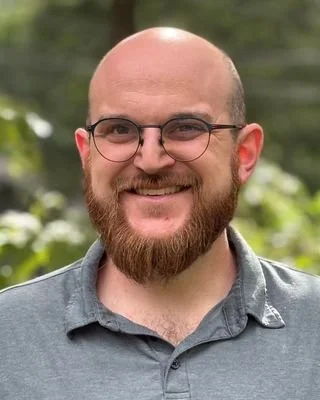
Sam Wolfe
Licensed Professional Counselor
Services

Individual Therapy

EMDR

Family Therapy

Virtual Therapy

Insurances Accepted